
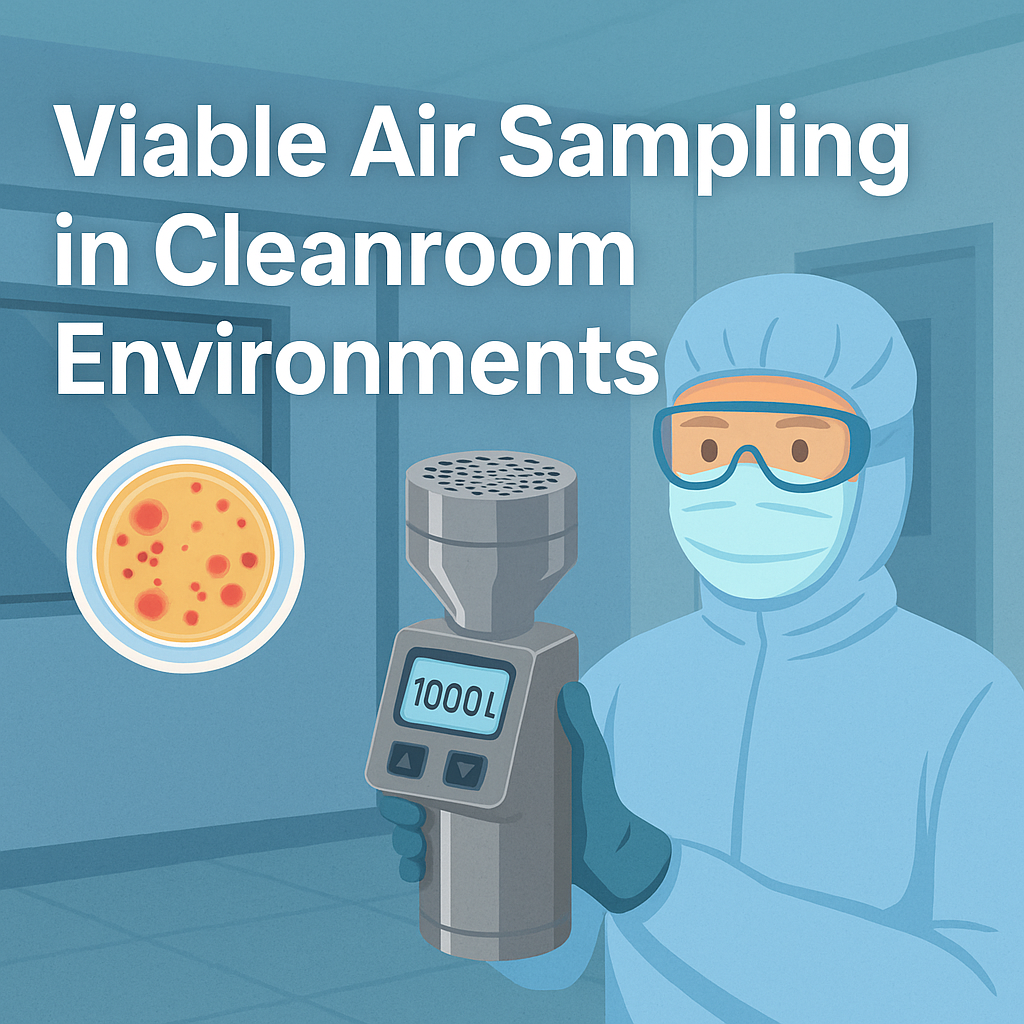
Viable Air Sampling in Cleanroom Environments: Background, Purpose, and Procedures

By the end of this lesson, the learner will be able to:
- Define viable air sampling and explain its role in environmental monitoring within sterile compounding and manufacturing environments.
- Identify regulatory standards and guidance documents related to air sampling (e.g., USP <797>, USP <1116>, ISO 14698, FDA aseptic guidance).
- Differentiate between passive and active viable air sampling methods, including settle plates and volumetric impaction samplers.
- Select appropriate sampling locations and frequencies based on risk assessment, cleanroom classification, and activity levels.
- Properly set up and operate viable air sampling equipment (e.g., slit-to-agar samplers, centrifugal samplers).
- Label, incubate, and interpret microbial recovery data using colony-forming unit (CFU) counts and action/alert limits.
- Document sampling results and respond appropriately to excursions including root cause analysis and corrective actions.
- Apply viable air sampling principles in compliance with USP, FDA, and cGMP environmental monitoring expectations.
About Instructor

Course Includes
- 1 Lesson
- 1 Quiz

Login
Accessing this course requires a login. Please enter your credentials below!
