
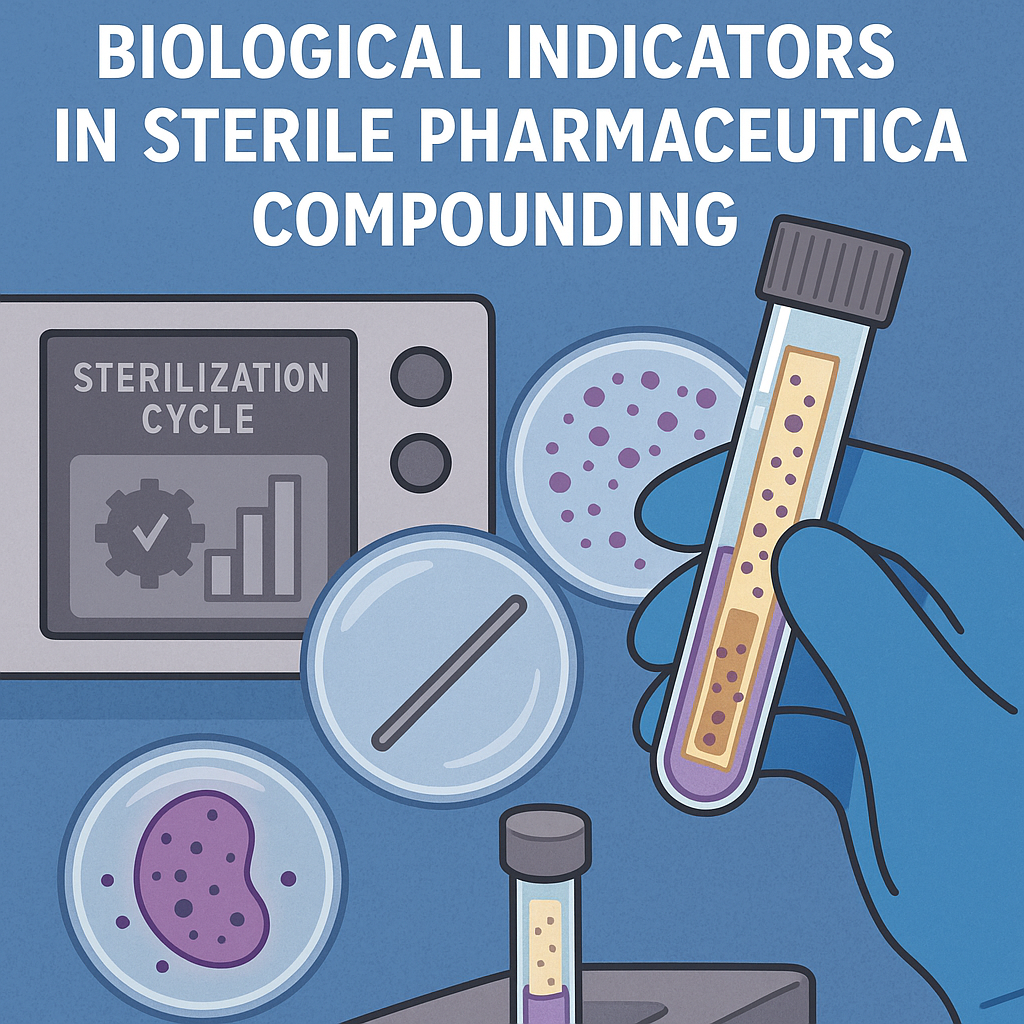
Purpose and Use of Biological Indicators in Sterile Pharmaceutical Compounding
Understand the critical role of biological indicators (BIs) in validating sterilization processes in sterile pharmaceutical compounding. This lesson explains the types of BIs, including spore strips and self-contained units, and their application in steam, dry heat, ethylene oxide, and hydrogen peroxide sterilization. Learn how to interpret BI results, comply with USP and FDA guidelines, and respond to failures with appropriate corrective actions.

By the end of this lesson, pharmacists and pharmacy technicians will be able to:
- List which sterilization processes biological indicators are used for.
- Define what Sterility Biological Indicators (BIs) are and explain their role in ensuring sterility assurance.
- Distinguish between different types of BIs: spore strips, self-contained BIs, and chemical indicators — and understand their uses.
- Demonstrate knowledge of the standards and regulations that govern the use of BIs in sterile pharmaceutical manufacturing.
- Apply proper techniques for using BIs in steam, ethylene oxide, vaporized hydrogen peroxide, and dry heat sterilization.
- Interpret results from BIs to assess sterilization cycle effectiveness.
- Develop protocols for responding to BI failures, including proper investigation and corrective actions.
About Instructor

Course Includes
- 1 Lesson
- 1 Quiz

Login
Accessing this course requires a login. Please enter your credentials below!
